9 October, 2026

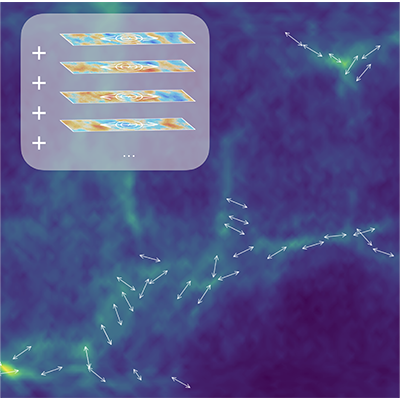
The information available from the oriented stacking of astrophysical fields is shown to be recoverable through the use of an appropriately constructed cross-power spectrum that takes account of the spin associated with the preferred orientation. The method is applicable to effects like the moving lens effect and the directional Sunyaev-Zeldovich effect.

9 October, 2026

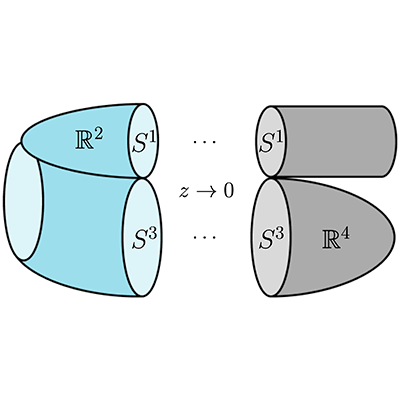
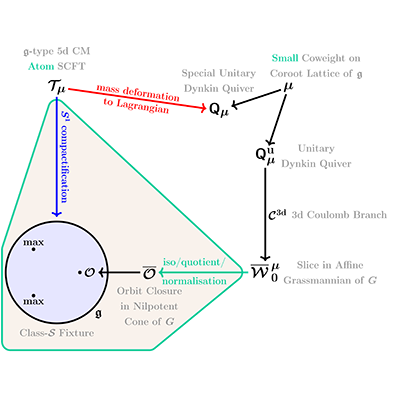
This paper completes another segment in understanding and classifying the 5-dimensional supersymmetric conformal field theories (SCFT). The authors show that a class of 5-dimensional special unitary quiver gauge theories admit a UV (high energy) completion in terms of 5-dimensional conformal matter SCFTs, which can be explicitly engineered via M-theory on a singular Calabi-Yau threefold.

Nobel Prize: Neutrinos from Far, Far Away (Updated)

6 October, 2026

Neutrino astronomy and the effort to build a cubic-kilometer-sized detector at the South Pole are recognized by the 2026 Nobel Prize in Physics.

Gallium Anomaly May Finally Be Explained
24 September, 2026

A decades-old neutrino mystery might be solved not by undiscovered physics but by improved calculations.

18 September, 2026

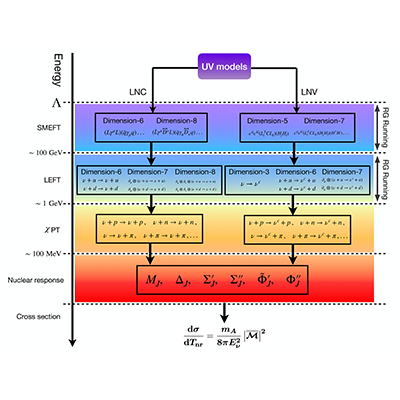
Coherent elastic neutrino-nucleus scattering provides crucial information for precision studies of neutrinos as well as searches for dark matter and other new physics. This paper develops a comprehensive Effective Field Theory treatment up to dimension eight which can account for new physics effects from energies above 100 GeV down to nuclear scales in a consistent manner. The authors include renormalization effects, careful power counting and matching of different theories at the appropriate scales, and possible UV completions of the effective operators.

18 September, 2026

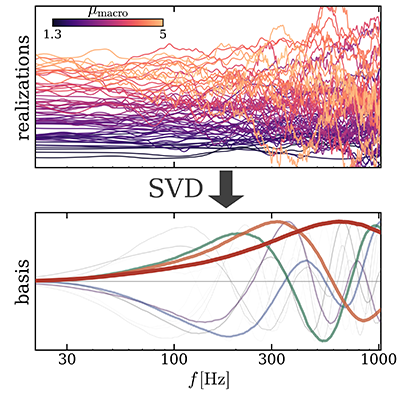
Gravitational waves lensed by galaxies and clusters can also be diffracted by the stars and compact remnants embedded within them, leaving frequency-dependent signatures in the observed signal that are computationally expensive to model. This paper introduces Reduced-Order Stochastic Diffraction, an efficient framework for modeling these complex microlensing effects with a computationally inexpensive surrogate model. The method can be readily incorporated into Bayesian GW analyses and adapted to different detectors, sources, and microlens populations. It therefore opens a new avenue for probing stellar populations through gravitational-wave lensing.

4 September, 2026

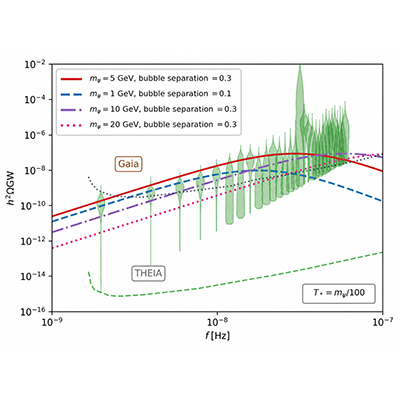
This paper studies dark matter in a spontaneously broken hidden U(1). The initial overabundant dark matter density is generated through the freeze-out mechanism. Because the subsequent first order phase transition becomes supercooled, the vacuum transition generates entropy, diluting the DM density to its current value. The MeV–GeV transition also produces nano-Hz gravitational waves potentially detectable by pulsar timing arrays such as NANOGrav.

26 August, 2026

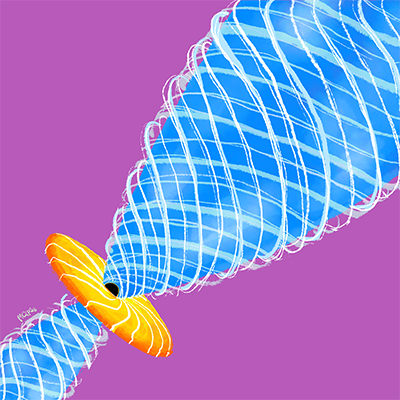
Rotating black holes are thought to drive some of the Universe’s most powerful outflows. A new analytic model finds that the energy carried away from a slowly rotating black hole is set mainly by its spin and magnetic flux at the horizon rather than the details of the surrounding accretion disk.

APS Early Career Astro Prize

In 2026, a new prize was introduced to celebrate the contributions of early-career researchers to the Physical Review journals within the Astronomy and Astrophysics Topical Group. Eligible candidates are early-career authors (PhD students and post-docs), and nominations should be submitted via email to astro@aps.org. The award includes a $2,000 cash prize, a certificate, an invitation to attend the APS Global Physics Summit in Atlanta, and the opportunity to present at Physical Review’s astro session at the GPS.

Please see the Announcement here for more details.
12 August, 2026

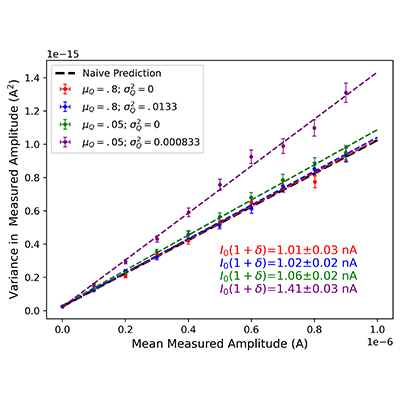
Advanced cryogenic detectors, e.g. qubit-based sensors or Kinetic Inductance Detectors (KIDs), often offer resolutions larger than a single detected photon’s energy. The authors demonstrate that commonly used statistical methods for calibration of such detectors can introduce systematic biases, leading to inaccurate energy scale and resolution measurements. This stems from an assumption of independence between detector resolution and photon number, which breaks down once realistic effects like position-dependent phonon collection efficiency or Fano fluctuations are taken into account. Finally, a method of correcting for said effects is proposed.

22 July, 2026

Computing the exact (all corrections included) on-shell action for black holes remains an outstanding problem. Working within the framework of AdS/CFT and using a powerful technique, equivariant localization, the authors evaluate the on-shell action for D=5 AdS rotating, charged black holes when higher-derivative quantum corrections are turned on. They also find a precise match with the superconformal index in a Cardy-like limit of the dual N = 1 superconformal field theory in four dimensions.

17 July, 2026

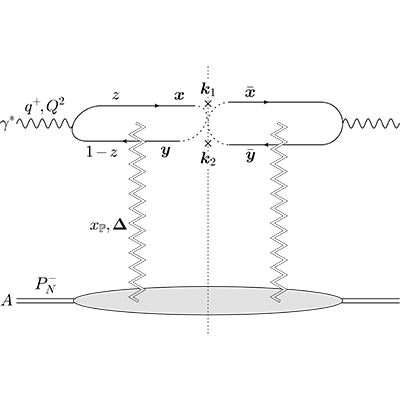
The JIMWLK evolution equations describe high-energy scattering and the gluon saturation regime of QCD. As an infinite hierarchy of coupled, non-linear equations, approximations are required to make any phenomenological predictions. One widely-used approximation in which one assumes many quantities are Gaussian-distributed random variables, is known to be accurate for a simple class of initial conditions. The authors explicitly demonstrate that this Gaussian approximation fails to accurately describe full JIMWLK evolution beyond this simplest configuration, which may have significant implications for heavy ion collisions.

A Simple Search for Tiny Charges

10 July, 2026

Decades-old experiments have now been enlisted to set new bounds on the properties of a hypothetical particle that bears a tiny fraction of the electron’s charge.

Astronomy and Astrophysics in the Physical Review

Several free-to-publish and Open Access journals from our portfolio have come together to form the Astronomy and Astrophysics Topical Group, dedicated to covering a broad range of topics in astronomy and astrophysics, from nuclear astrophysics to exoplanets and planetary atmospheres.

Sign In to Your Journals Account

Filter

Filter

Article Lookup

Enter a citation